| Home Flowers Vegetables Herbs Bulbs Fruit Organic Trees 'n Shrubs How to Grow Plant Problems Houseplants |
| All About Your
Favorite Flowers:
Annuals
|
How to Grow Marigold Plants
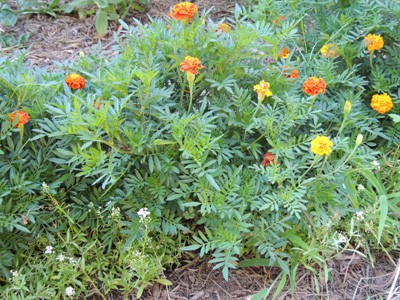
Annual, Tagetas Ercta, Tagetas Patula Marigold plants are traditionally one of the more popular flowers in the home garden. They are easy to grow, making them perfect for beginners, and especially kids. Marigolds are prolific bloomers. Their blooms first appear in early to mid summer, and continue all the way to a heavy frost. There is a wide range of varieties, from miniature plants that are smaller than a foot, to giant varieties that can grow up to four feet tall. Marigolds colors, include yellow, orange, red, white and many bicolor combinations. Flowers bloom from mid-summer to frost. They look good in the garden, in containers, and indoors as cut flowers in small dishes and bowls. Marigold plants have a pungent odor that repels insects. Plant them around the flower beds, as a natural insect repellent. They are also used as an ingredient in homemade insect repellents.
Plant Propagation: Directly seed Marigolds into your flower garden in early spring. You can also start them indoors for transplanting later. We recommend an early , indoors stat to enable you to get earlier blooms. Marigold plants transplant well. Sow Marigold seeds early in the season and cover lightly with soil. Water thoroughly. Seeds germinate fast and easy. Plants are fast growers Transplant Marigolds into your garden after the last frost date for your area. Spacing depends upon size with miniature varieties spaced four to six inches apart, and Giant varieties one to two feet apart.
How to Grow Marigold Flowers: Marigold plants prefer full to partial sun. They will do best in moist, fertile soil. In average to poor soils, add compost and manure prior to planting. Add a general purpose fertilizer once a month. Once they are established and growing well, your Marigold plants require little attention. For best growth results, keep soil moist, not wet. Water during dry periods, once or twice per week. Add mulch around the plants for appearance and to keep weeds down. Around mid-summer, your plants will begin to produce flowers and will continue to do so up to the first frost. Deadhead flowers to encourage new blooms and for appearance. Marigolds are hardy annuals. They should survive light frosts and will often continue to bloom long after other annuals are gone.
Insect and Disease: Insects largely avoid the pungent odor of marigolds. Slugs however, are a common problem. Use slug pellets for control. Plant problems are infrequent, except in wet weather.
|
******* Shop For:
Cell Phones
|
Copyright © Premier Star Company |